One doorframe, sensor to skin
The warning path, step by step: the laser grid catches the doorframe, the reflex picks the closest column and a belt motor, the driver rings it, and the skin knows before the body arrives.
The Third Eye Kit is a wearable that gives blind and visually impaired people the freedom to move. Small vibration motors at the collar, the belt and the ankles buzz where something is in the way. Stronger means closer.
The second generation is still in build and has not passed its tests, so keep moving the way you move now. Using TEK today
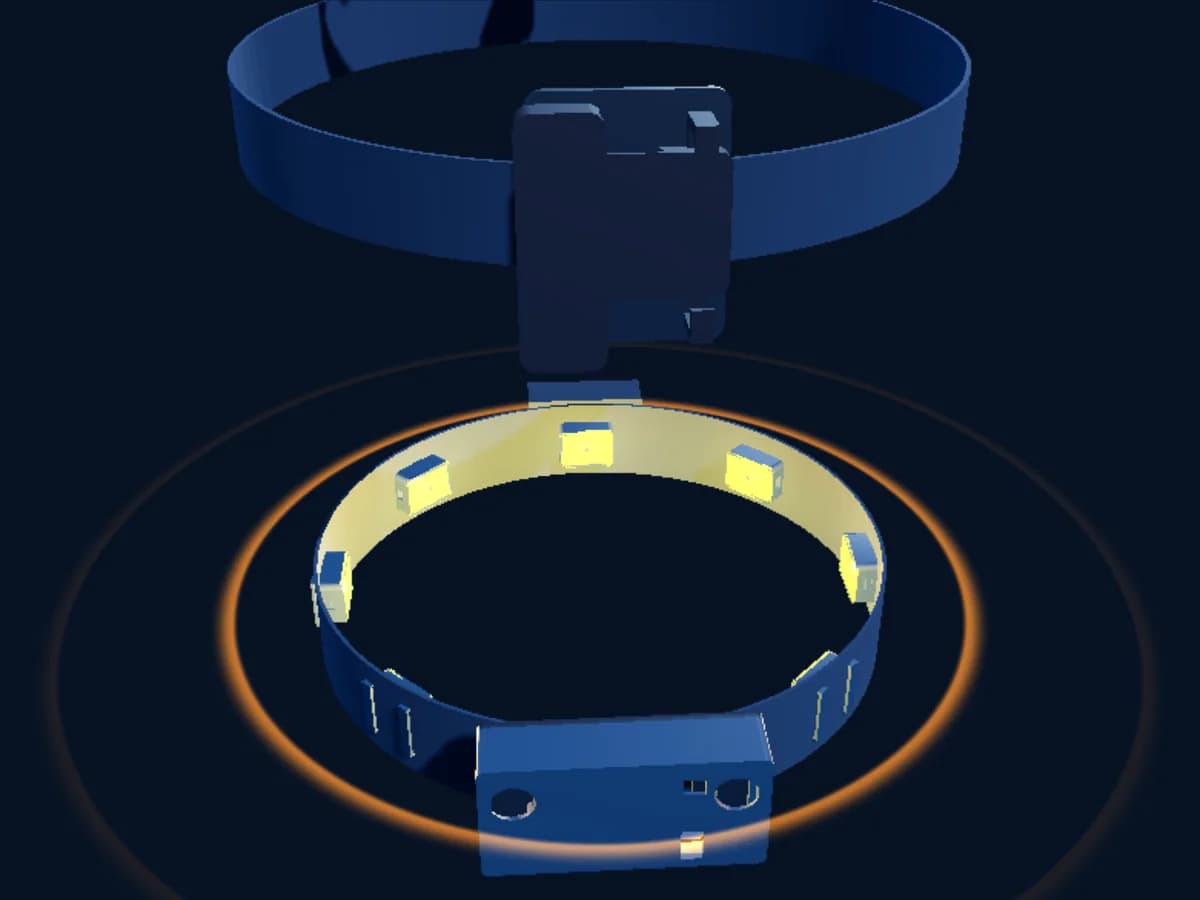
The kit, from its real part files. Amber means it is speaking.
The belt speaks: something at your waist, on the side it buzzes.
The moving 3D kit is off here: your settings, your connection, or this device asked for the fast page.
 Built by Said Mohaddes SadeqiFounder, Third Eye Worldwide
1
I am Said Mohaddes Sadeqi. I lost my sight in the war and was blind in both eyes. I recovered sight in one eye. I am still blind in the other.
2
The people I met there taught me what courage means, and how far behind technology had left them.
3
A branch at head height, a glass door, someone crossing fast. Too much of the world is met only when it touches you. The warning should come before the touch.
4
A belt, a collar and two ankle bands with twenty small vibration motors, fed by laser, radar and sonar. Where it buzzes is where the obstacle is, and stronger means closer.
5
The first generation reached the TEKNOFEST 2022 final and won Best Presentation. Our team built and gave out tens of kits, and because the design is open, others built hundreds more.
Move the person or the objects. The body lights up where the kit would buzz.
Choose the person or an object to move it.
The design goal is simple: the kit is built to replace the white cane.
Story, Engineering, Vision, in the founder's own voice. With captions, an audio described version and a full transcript.
You learn the kit by playing first, in a simulated street, before you wear it in a real one. A simulation. In development.
Walk the first stretch of a sidewalk. Arrow keys, the buttons, or drag on the street. Sound is off until you turn it on.
Simulation. In development.
The kit on the body
Clear. Nothing near.
One obstacle, five stages, and the step. Press Play to watch the signal travel, slowed about seventy times, or Step through it. Every number is the engineering record's modeled figure until the bench measures it.
Three short recordings, under thirty seconds each. They are silent, and the captions describe what happens on screen.
The warning path, step by step: the laser grid catches the doorframe, the reflex picks the closest column and a belt motor, the driver rings it, and the skin knows before the body arrives.
Ten parts on one standing figure, seen from the front. Pick the collar, the belt pod, the breakaways, or an ankle band, and each lights up with what it does and why it sits there.
The guided walk through the eight metre hallway: the belt lights for the open cabinet door, the collar says duck for the hanging sign, and the ankles sweep upward at the stairs. On your own phone this is sound and vibration too.
The kit in use, from start to finish: what the wearer feels, where it buzzes, and why.
Video not here yet. This full length video is being added to the site. Nothing plays here until the real recording is in place.
Two generations, three laws of touch, every part and file published, and the build step by step.
See the build, step by stepYour gift pre-orders a kit for a blind or visually impaired person. Here is exactly what it buys.
See what a gift doesThe whole story in one minute, written for your screen reader, with an audio version.
Tell meThe Third Eye Kit is developed by Third Eye Worldwide in collaboration with researchers at Columbia University's Computer Enabled Abilities Lab (CEAL).
A gift pre-orders a kit for a blind or visually impaired person who needs one.
Give