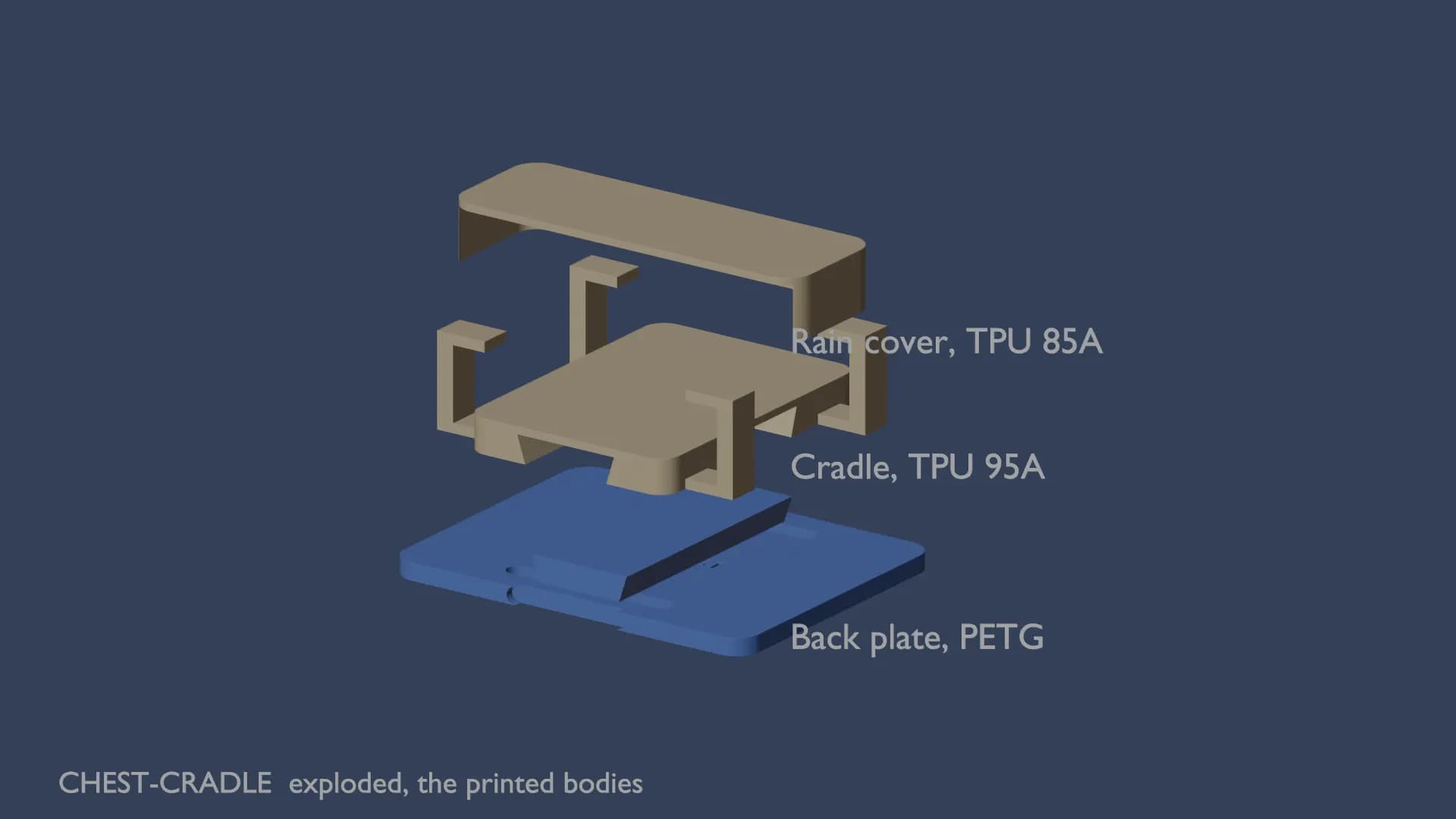
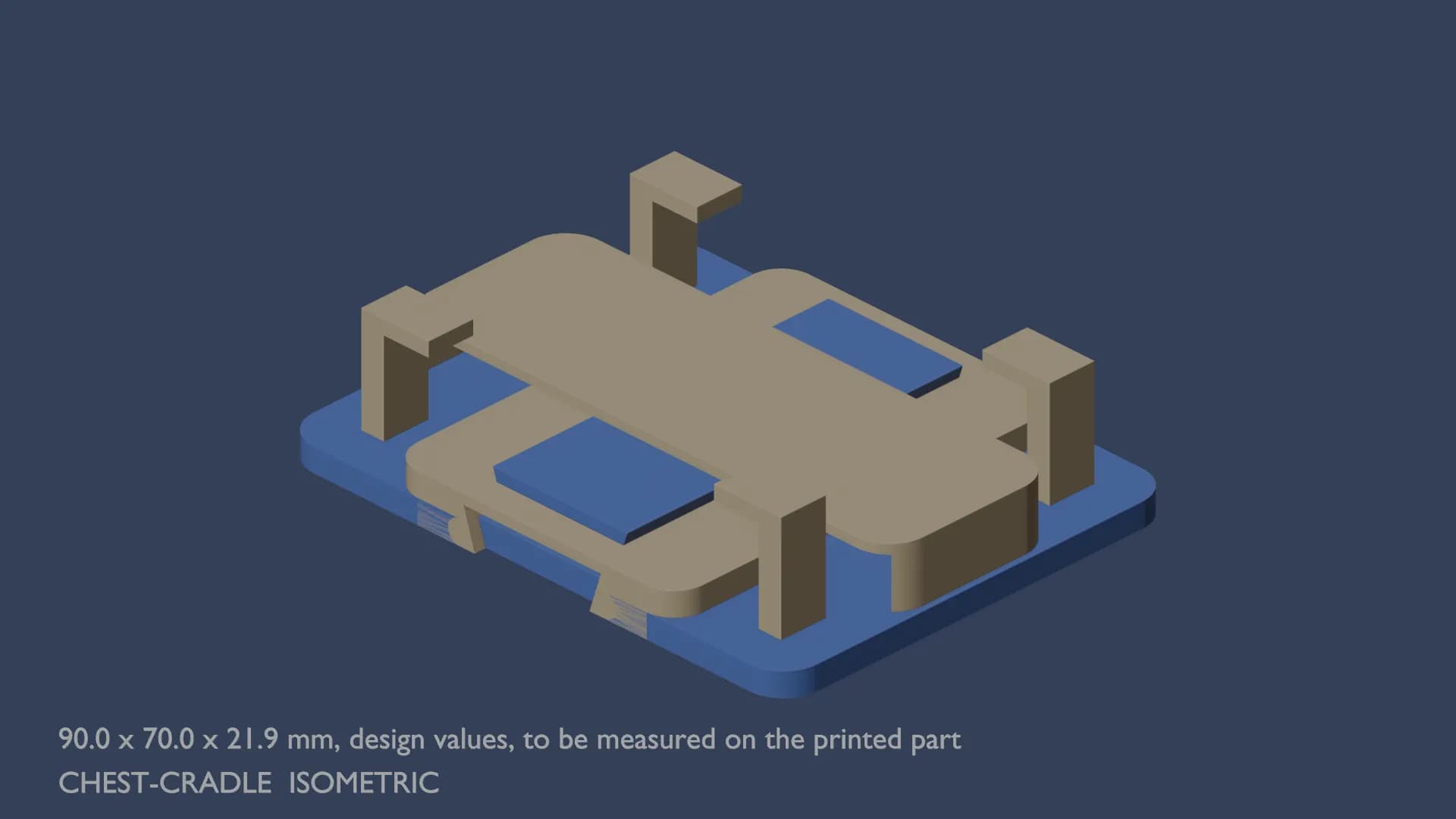
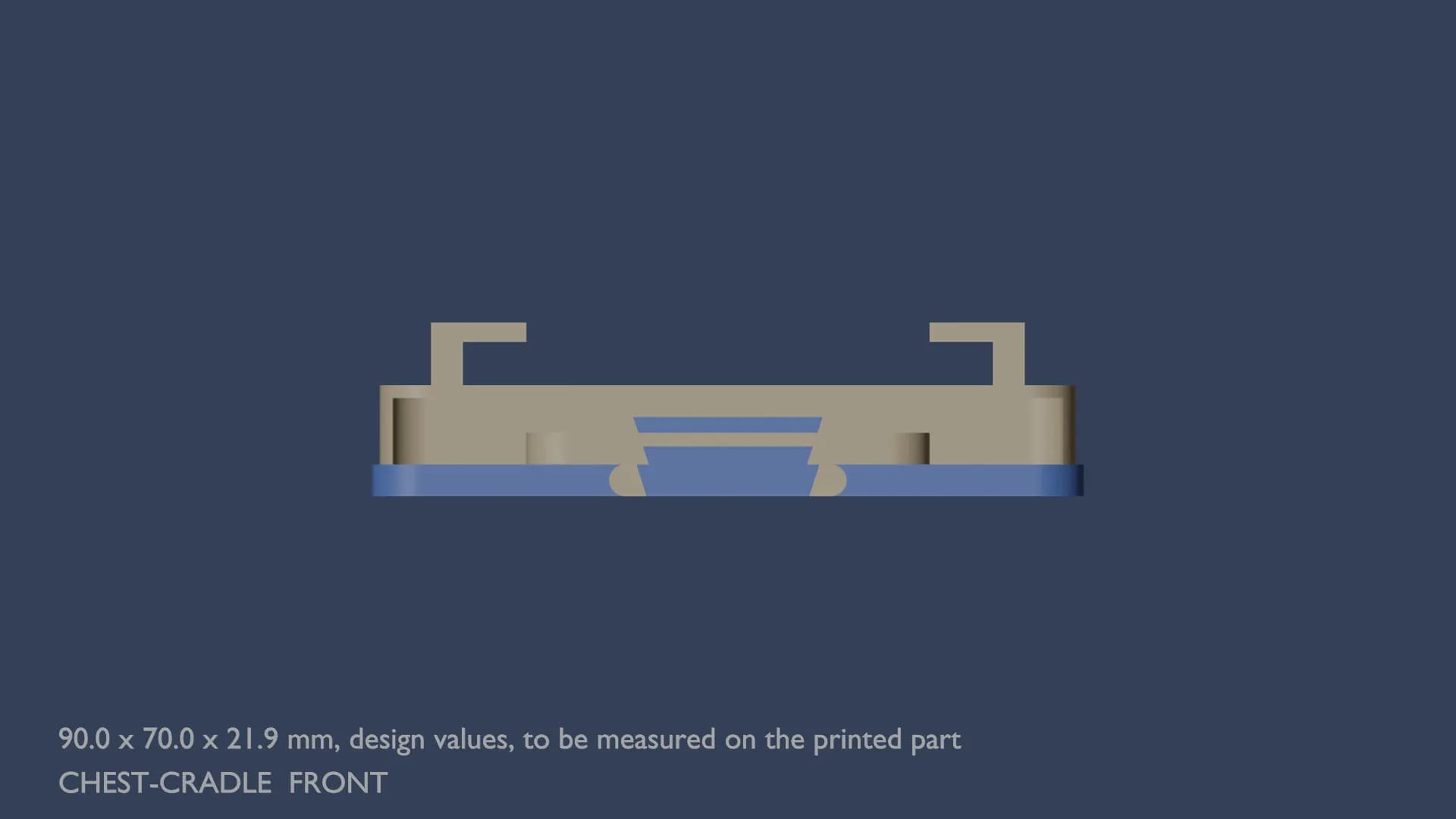
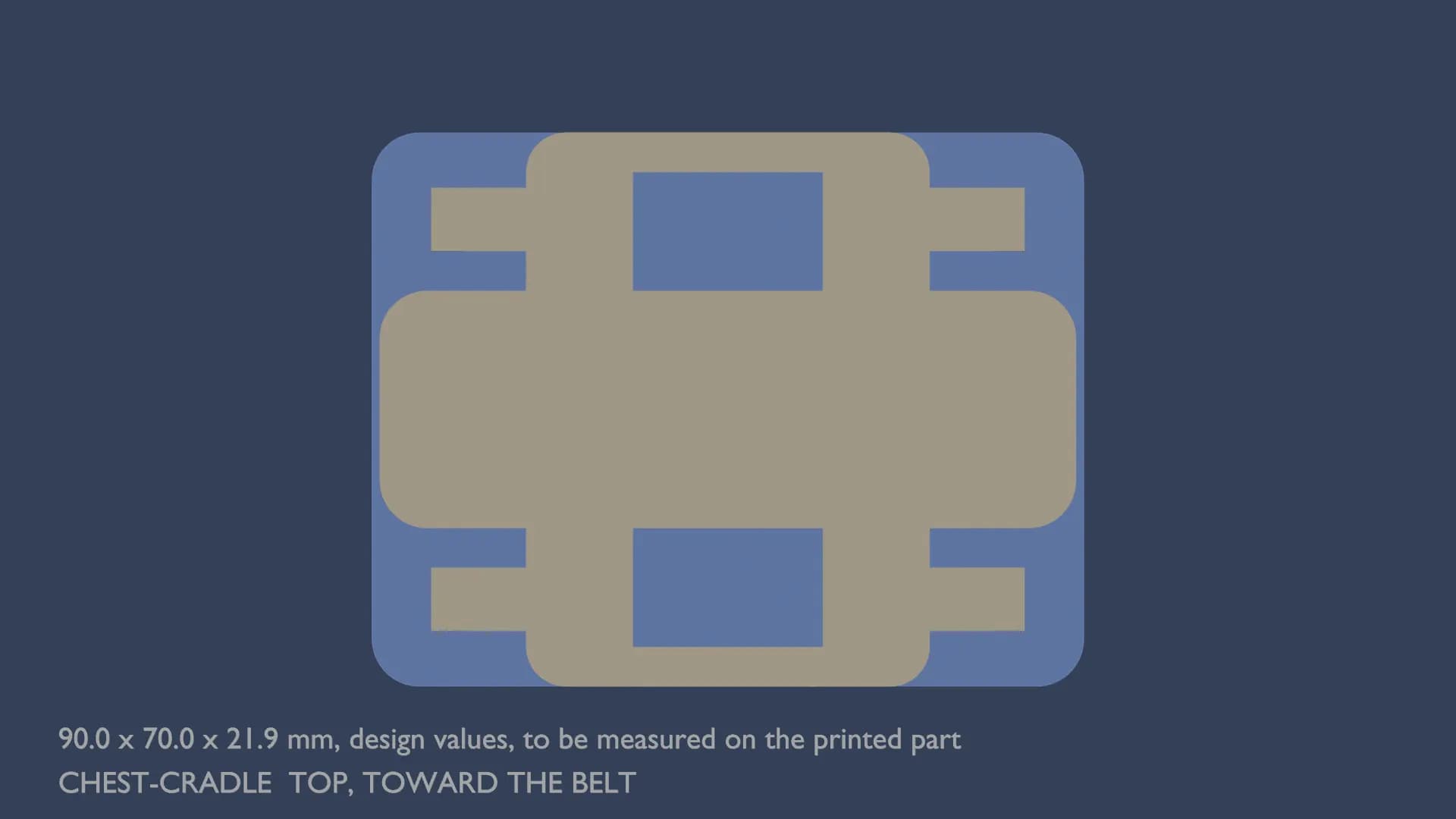
Decision: a quick release printed cradle on an elastic chest strap that shares the belt anchor so it does not pull. Holds the wearer's own phone in portrait or landscape with a rain cover option. Wireless to the Spine over Bluetooth; no cable to snag. Breathing and bounce are absorbed by a compliant TPU cradle face.
Camera alternative for wearers who cannot spare a phone: a low cost module driven by the Spine, clipping into the same mount. Candidates: Grove Vision AI V2 or OpenMV class modules. The phone path is the default because it is free to a wearer who already has a qualifying phone.
Roadmap, on the roadmap, planned after the tests: a smart glasses scene layer (an open OpenGlass class build on a XIAO ESP32-S3 Sense first, commercial frames such as Brilliant Labs Frame to demo and Halo when it ships) and, for wearers without a qualifying phone, a waist pouch in the Raspberry Pi 5 class with an AI accelerator hat. An optional stereo depth camera (OAK-D Lite class) stays a research rig instrument. The head camera pick for the scene layer is a wide module in the Raspberry Pi Camera Module 3 Wide class, run at 1 to 2 MP and 30 to 60 fps, because motion, field, and latency beat pixel count for obstacles; full resolution stills are taken only for reading text, on request. The scene layer describes and never warns.